
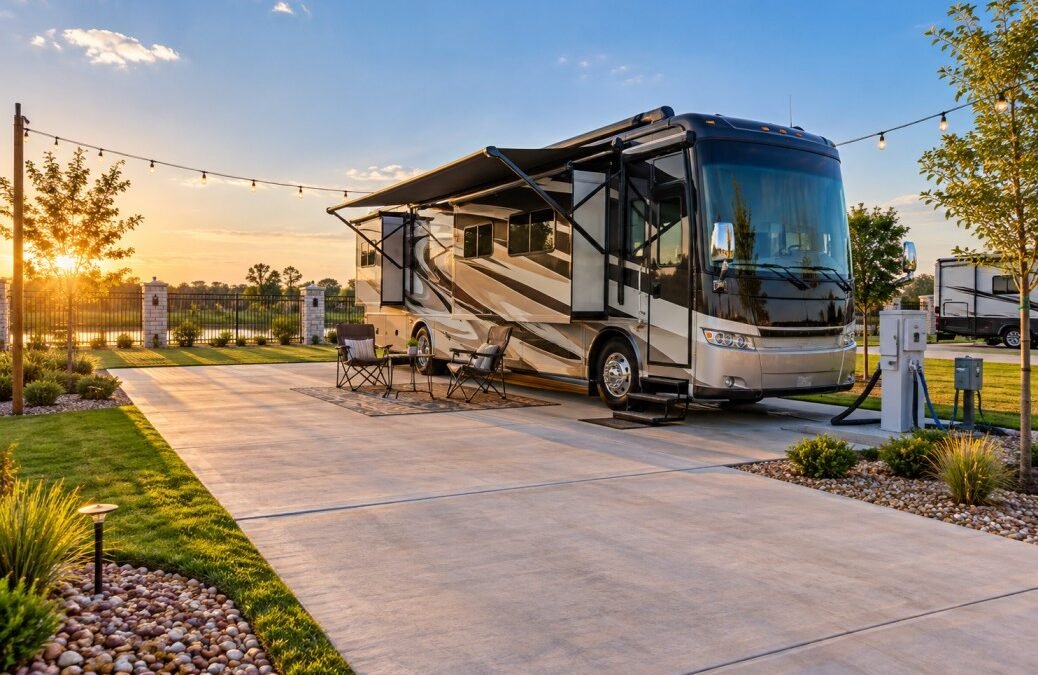
Somewhere between your third week of hopping from park to park and the fourth time you’ve had to re-level your rig in a new spot, the idea of just staying put for a while starts to sound pretty good. That’s usually the moment people start looking into a monthly RV site in Texas instead of booking night by night. It’s cheaper, it’s simpler, and it gives you an actual home base for a while.
But a monthly stay isn’t just a longer version of a weekend trip. There are a few things that catch first-timers off guard, including billing details, site requirements, rules you don’t find out about until move-in day. Here’s what to actually look into before you sign up for a month (or more) at any RV resort.
Why More RVers Are Choosing Monthly Stays in Texas
Part of it is money. Monthly rates almost always work out cheaper per night than booking daily or weekly, sometimes by a wide margin once you add up what a month of nightly bookings would actually cost. Part of it is lifestyle. More people are working remotely from their rigs now, more retirees are spending entire seasons in one spot instead of driving cross-country, and Texas happens to check a lot of boxes: mild winters, a central location that makes it easy to reach other parts of the country, and no shortage of long-term RV parks to choose from. According to the RV Industry Association, RV ownership and long-term travel have both climbed steadily over the past several years, and Texas consistently ranks among the top states for it.
There’s also a practical side that doesn’t get talked about as much. Setting up once and staying put means you’re not breaking camp and re-leveling your rig every few days, not relearning a new park’s layout every week, and not spending half your trip hunting for the next spot to sleep. If you’re comparing Texas against other long-term options, it’s worth reading through our roundup of top RV parks in Texas for long-term stays to see how different regions and resorts stack up before you settle on one.
How Monthly RV Rates Actually Work
This is where most of the confusion starts. Monthly RV rates aren’t just “nightly rate times 30.” Most resorts drop the price per night significantly once you commit to a month, but what’s included in that price varies a lot from one place to the next.
Typically, your monthly rate covers your site and the basics: water, sewer, and a set amount of electric. Where it gets tricky is electricity overages. Some parks bill electric separately based on usage, especially in the summer when your AC is running nonstop. Others just build it into a flat rate. Neither approach is wrong, but you want to know which one you’re dealing with before you get a bill that surprises you.
Rates also shift depending on the season, the size of the site, and whether you’re booking a pull-through, back-in, or a premium spot near the amenities. Peak travel months and snowbird season tend to push rates up, while off-season months sometimes come with discounts if a park is trying to fill sites. It’s also common for resorts to require a deposit to hold a monthly site, and some apply a discount the longer you commit, so a three-month stay might work out cheaper per month than booking one month at a time.
If you’re comparing a few resorts, it’s worth checking their rates directly rather than going off a number you saw somewhere secondhand, since a lot changes between “starting at” pricing and what you’ll actually pay for your rig. It also helps to ask whether taxes are included in the quoted rate or added at checkout, since that’s another detail that varies by park and can shift your final number more than people expect.
Questions to Ask Before You Book
A few minutes on the phone before you book can save you a headache later. Here’s what’s worth asking.
Is the site full-hookup or partial?
Full hookup means water, sewer, and electric are all at your site. Some parks advertise “hookups available” without specifying, which usually means you’re sharing a dump station or hauling water. For a month-long stay, full hookups aren’t a luxury. They’re basically a requirement.
What’s the cancellation or early-departure policy?
Plans change. Maybe work calls you back early, or the weather turns. Ask what happens if you need to leave before your month is up, since some parks prorate a refund, others don’t.
Are there length-of-stay minimums or maximums?
Some resorts have a 30-day minimum for the monthly rate to apply. Others cap how long you can stay at all, especially if the park splits its sites between short-term and long-term guests.
What’s included in the monthly rate?
Wi-Fi, laundry, trash pickup: these seem like small things until you’re doing math on a month-long stay. Get a clear answer instead of assuming.
Is the site big-rig accessible?
If you’re driving a larger motorhome or towing a fifth wheel, confirm the site length, pad width, and turning radius before you book. A site that looks fine in photos can be a tight squeeze in person.
Does the park require proof of insurance or a specific rig age?
Some resorts have age restrictions on RVs, usually tied to safety or appearance standards, and most will ask for proof of insurance before you move in. It’s a quick question that can save you from showing up with paperwork you don’t have.
If you’re new to booking RV sites in general, our guide on essential tips for first-time RV travelers near Houston covers a lot of the basics that apply whether you’re staying one night or thirty.
What to Look for in the Resort Itself
Rates matter, but so does what you’re actually parking in for the next several weeks.
Concrete pads hold up a lot better than gravel or dirt, especially if Texas throws a few heavy rain days at you. Site spacing matters more for a monthly stay than a weekend one, since you’re going to notice if your neighbor’s slide-out is three feet from your window every single day, not just for one night.
Security is worth a real look too. Gated access and decent lighting go a long way toward peace of mind, especially if you’re leaving your rig for stretches at a time. And then there’s the amenity list: laundry, a fitness center, a dog park, a business center if you’re working remotely. These aren’t just nice extras for a monthly guest; they’re things you’ll actually use on a weekly basis. It’s worth browsing a resort’s full amenities page before booking, since photos on a listing site don’t always tell the whole story.
Don’t overlook the community, either. A month is long enough that your neighbors stop being strangers. Parks with a mix of long-term residents tend to have a calmer, more settled feel than ones built mostly around one-night stays, and that atmosphere is hard to gauge from a website alone. Reading recent reviews, or even calling the park and asking what the current mix of short-term versus long-term guests looks like, can tell you a lot about what your stay will actually feel like.
Location matters too, more than people expect. A quiet site that’s still close enough to grocery stores, a laundromat backup, and a hospital or urgent care can make a month-long stay a lot easier than one that’s technically cheaper but an hour from anything. It’s worth reading through our comparison of the best RV resorts near Houston for families and long-term stays if you’re trying to weigh location against price and amenities side by side.
Documents and Details You’ll Need to Book
Most resorts will ask for a photo ID and basic details on your rig, such as make, model, and length at minimum. Some also want proof of RV insurance. You’ll likely be asked for a deposit up front, which is standard for longer stays, so don’t be alarmed if a park requests one before locking in your dates.
It also helps to ask about check-in specifics ahead of time: what time you can arrive, whether someone will walk you through the site, and where to park temporarily if your spot isn’t ready the moment you pull in.
Common Mistakes First-Time Monthly Renters Make
A few things trip people up more than anything else:
- Not confirming rig length and slide-out clearance beforehand. A site can technically fit your RV and still leave you cramped once your slides are out.
- Assuming pricing is all-inclusive. Always ask directly about electric metering rather than guessing.
- Booking off photos alone. If you can, call and ask specific questions about the exact site number you’re being offered.
- Skipping the fine print on quiet hours and long-term guest rules. Parks with a strong long-term community usually have rules in place to keep it that way, and it’s better to know them going in than to learn them the hard way.
- Forgetting to plan for mail and packages. If you’re staying a month or more, figure out early whether the resort accepts deliveries on your behalf or if you’ll need a separate mail forwarding solution.
- Not budgeting for Texas weather swings. Summer heat and occasional storms can affect everything from your AC usage to whether outdoor amenities are usable that week, so it helps to ask how the park handles extreme weather before you’re caught off guard.
Is a Monthly RV Site Near Houston Right for You?
If you’re looking at options in the Houston area, it’s worth comparing what different resorts actually offer for a monthly stay, not just the headline rate. At Porter Strong RV Resort, monthly guests get full hookups, spacious concrete pads, a gated and secure community, and access to amenities built for longer stays, all about 25 miles from Houston. It’s close enough for easy trips into the city, but quiet enough that it doesn’t feel like you’re camping next to a highway.
If you’re weighing whether a monthly site here makes sense for your plans, reach out to the team, and they can walk you through current availability and answer any rig-specific questions before you commit.
FAQ
It varies by resort, season, and site size, but monthly rates are almost always significantly lower per night than nightly bookings. It’s best to check current pricing directly with the park you’re considering.
Not usually. Most RV resorts treat monthly stays as an extended reservation rather than a formal lease, though some may ask for a deposit or minimum stay commitment.
Monthly stays are typically billed and renewed month to month, while seasonal stays often lock in a longer block of time, like an entire winter, sometimes at a further discounted rate.
Most resorts can accommodate larger motorhomes and fifth wheels, but it’s worth confirming site length and clearance ahead of time, especially if your rig has multiple slide-outs.
A monthly stay can be one of the most comfortable ways to experience RV life in Texas, as long as you go in with the right questions answered. Take the time to ask about rates, hookups, and site details up front, and you’ll spend a lot less time troubleshooting and a lot more time actually enjoying the stay.