
If this is your first RV trip near Houston, here’s the short version: book your site earlier than feels necessary, understand your hookups before you arrive, watch the weather more than the calendar, and give yourself extra drive time for traffic. Everything else is detail, but it’s the detail that trips most first-timers up.
Houston’s RV scene differs from the Hill Country or North Texas. Humidity changes how you think about hookups and bug protection, traffic changes how you plan arrival times, and the number of resorts near downtown means first-timers often pick a site on price alone, then get surprised by what a checklist would have caught.
1. Book Your Site Earlier Than You Think You Need To
New RVers tend to treat reservations like hotel bookings, something handled a few days out. That works fine in January, but not during spring break, Rodeo season, or any holiday weekend, when Houston-area resorts fill up fast.
Book 3-4 weeks ahead for peak season (spring break, summer weekends, Thanksgiving, Christmas). Off-season weekdays, 1-2 weeks is usually plenty. Ask specifically for a pull-through site if this is your first time backing a trailer or motorhome, since back-in sites require more maneuvering than a first trip needs. Check current site rates and availability before you commit to dates, since pricing shifts between peak and off-peak weekends. The RV Industry Association has tracked steady growth in RV ownership, showing up most in weekend and holiday demand at popular resorts.
2. Understand Full Hookups Before You Arrive
“Full hookups” means three things: water (a direct line to the site’s supply), electric (usually 30-amp or 50-amp, depending on your rig), and sewer (a direct connection so you skip managing a holding tank).
The most common mistake is not knowing which amp service your rig needs. Plugging a 30-amp rig into a 50-amp pedestal, or the reverse, causes problems fast, sometimes a tripped breaker, sometimes real damage. Build in a few habits early: use a water pressure regulator, since Houston’s municipal pressure can run higher than your plumbing is built for, support your sewer hose so it doesn’t sag, and test the pedestal with a circuit tester before connecting anything expensive.
3. Plan Around Houston’s Weather, Not Just the Calendar
This region doesn’t follow tidy seasonal patterns. Gulf humidity, sudden afternoon thunderstorms, and a hurricane season running June through November affect trip planning here, regardless of the morning forecast. It’s common to leave under clear skies and return to a pop-up storm by mid-afternoon, especially in summer. Check the National Weather Service’s Houston-Galveston office the morning of your trip, ask about the resort’s storm protocol at check-in, and don’t underestimate how hard your AC works in summer heat.
4. Know the Drive Times and Route Realities
Distance on a map and actual drive time are two different things here. I-45, I-10, and Beltway 8 see heavy congestion, and towing a larger rig through that traffic differs from driving a sedan. Avoid arriving between 4 and 6 p.m. on weekdays if possible. If your route runs through the inner loop, watch bridge and overpass clearances, since taller rigs can run into trouble on routes that work fine for standard vehicles.
5. Pack a First-Timer’s Checklist That’s Actually Useful
Most generic RV checklists online are recycled and half-irrelevant. What actually matters here: leveling blocks and wheel chocks, a drinking-water-safe hose kept separate from your rinse hose, basic hookup tools plus a circuit tester, mosquito protection (Gulf Coast season runs longer than most expect), and a printed reservation copy in case signal drops. Most new RVers over-pack clothing and under-pack the gear that actually prevents problems.
6. Learn RV Resort Etiquette Before You Roll In
Resort-style parks enforce etiquette more strictly than public campgrounds, mostly due to closer site spacing and more families and pets around. Quiet hours are real, usually starting around 10 p.m. Speed limits, often 5-10 mph, exist because kids and pets move through resort roads freely. Cutting through an occupied site as a shortcut annoys neighbors fast, and generator use is often restricted since it’s unnecessary once connected to power.
7. Understand Short-Term vs. Long-Term Site Differences
Pricing and site assignment can differ between a nightly stay and a monthly one. If what feels like a trial run might turn into something longer, ask about monthly rates even if you’re only booking a week, since it’s easier to ask upfront than renegotiate mid-stay. If long-term RV living interests you, our guide to affordable monthly RV stays near Houston breaks down the costs and lifestyle differences.
8. Test Your Rig Locally Before a Longer Trip
Before committing to a multi-day trip, take your RV out for one night close to home first. This single habit catches more than any checklist can: propane leaks, low tire pressure, an awning that won’t retract, appliances that worked in storage but not on the road. A stuck slide-out is minor in your driveway, and much bigger forty miles from the nearest RV service center.
9. Know What’s Nearby So You’re Not Stuck at the Site All Day
A common mistake is treating the resort as the entire destination and never leaving it. That’s fine for an overnight, but for longer stays, build in one full day trip. The Houston area has plenty within reach, and our guide to things to do near Houston covers the closest options if you want to plan the day ahead of time.
10. Have a Backup Plan for Connectivity and Emergencies
Frequently Asked Questions
Cell coverage around Houston is generally solid but can dip on rural approach roads. Download offline maps before you leave, note the nearest urgent care and RV service center, and save your resort’s front desk number. If anything’s unclear before you arrive, contact us directly and staff can walk you through hookup specs and site details.
No, not for most RVs. Texas doesn’t require a special license for standard motorhomes or towable trailers under a certain weight threshold. Larger Class A motorhomes or trailers over that threshold may require different insurance coverage, so it’s worth checking with your insurer before your trip rather than assuming your regular auto policy covers it.
For peak times like spring break, summer weekends, or Thanksgiving and Christmas, book 3-4 weeks out. For off-season weekdays, 1-2 weeks is usually enough, though booking sooner never hurts if your dates are flexible.
A pull-through site lets you drive straight in and straight out without backing up, which is easier for first-timers. A back-in site requires reversing your rig into the spot, which takes more practice and space awareness. If it’s your first trip, request a pull-through site when you book.
Most do, though policies vary by resort. Some have breed or weight restrictions, and nearly all require pets to be leashed outside your site. Always confirm pet policies directly with the resort before booking if you’re traveling with animals.
Check the National Weather Service’s Houston-Galveston office forecast each morning, and ask your resort about their storm protocol at check-in. Most resorts have a plan for high winds or severe weather, including where to park or shelter if needed.
None of these tips are complicated alone. What trips people up is not knowing which ones matter before the trip starts. Booking early, understanding your hookups, and watching the weather solves most problems first-time RV travelers run into near Houston.
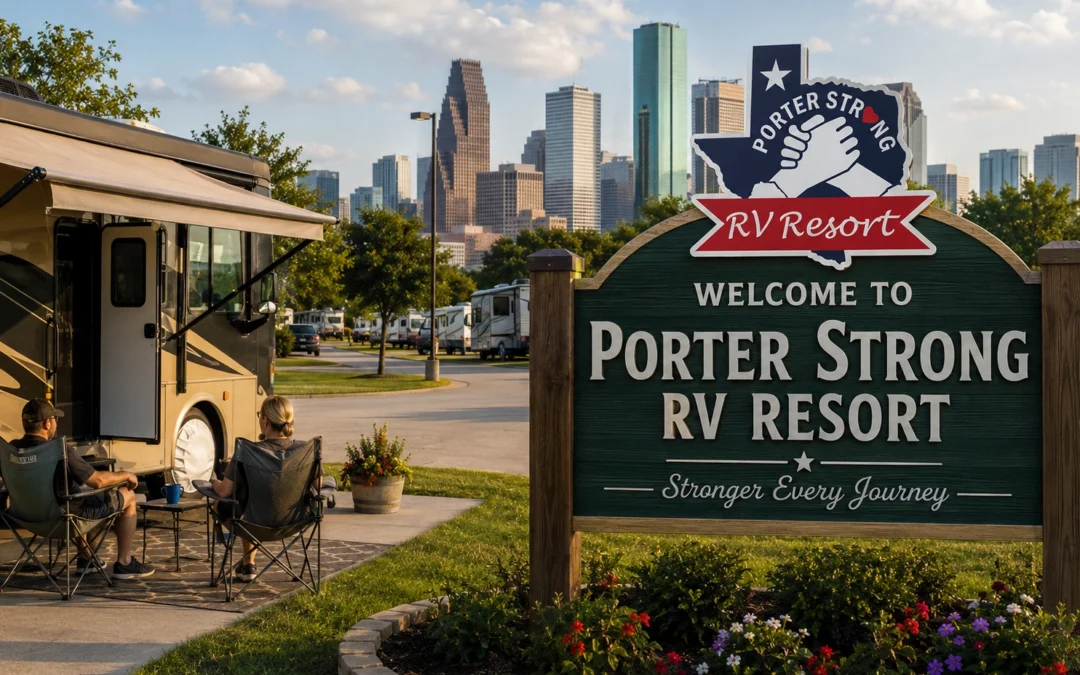
If you’re looking for a resort near Houston with full hookups, wide pull-through sites, and staff used to walking first-timers through setup, Porter Strong RV Resort is worth a look.