
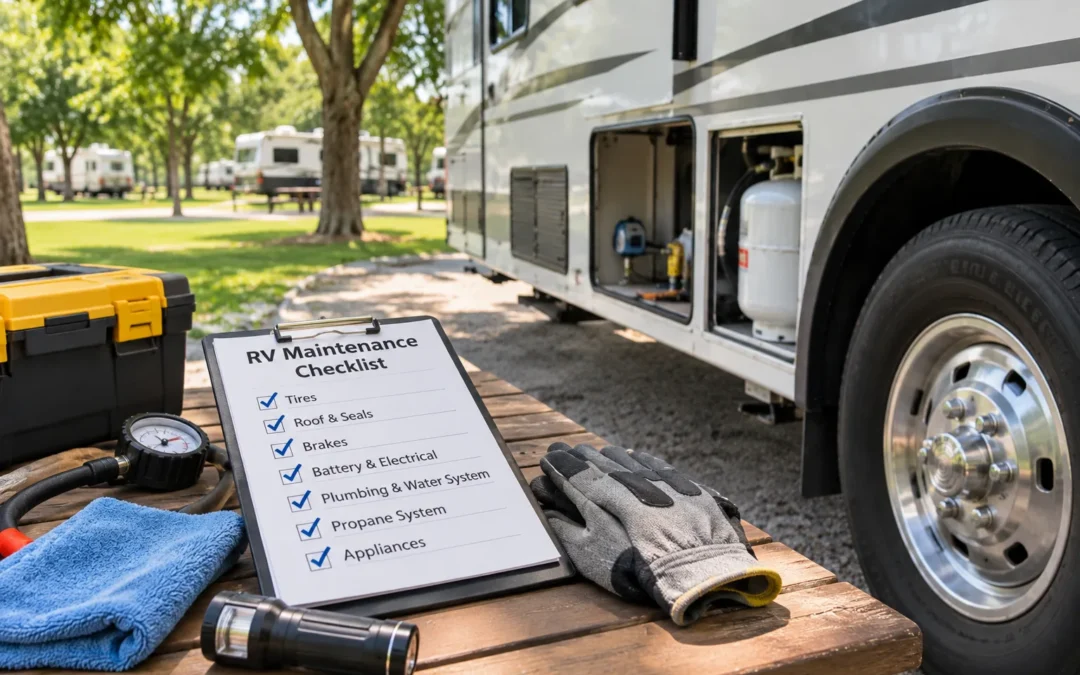
Owning a recreational vehicle (RV) offers the freedom to travel, explore new destinations, and enjoy comfortable stays on the road. However, keeping an RV in good condition requires regular attention to its tires, roof, brakes, plumbing, electrical systems, and appliances. Following the right RV maintenance tips can help owners identify potential problems early, reduce unexpected repair costs, and keep their vehicles ready for upcoming journeys.
Whether you own a motorhome or a travel trailer, a consistent maintenance routine is essential. Here are 10 practical ways to maintain your RV and protect your investment.
A Practical Checklist for Keeping Your RV in Top Condition
1. Check Tire Pressure and Condition Regularly
RV tires support considerable weight and experience different road and weather conditions. Incorrect tire pressure, worn tread, and visible damage can affect vehicle handling and increase the risk of tire failure.
Make tire inspections part of your regular maintenance routine. Check the following:
- Measure tire pressure when the tires are cold using a reliable pressure gauge.
- Follow the recommended inflation pressure for your RV’s actual loading conditions and the tire manufacturer’s guidance.
- Look for cracks, cuts, bulges, and uneven tread wear.
- Inspect the valve stems and spare tire.
- Check for unusual changes in tire pressure before long journeys.
Do not rely only on a visual inspection because a tire can be underinflated without looking flat. The National Highway Traffic Safety Administration (NHTSA) provides additional tire safety and maintenance guidance.
2. Inspect the RV Roof and Exterior Seals
Water leaks are a common concern for RV owners. Small cracks or damaged sealant around roof openings, windows, and doors can allow moisture to enter the vehicle, potentially damaging walls, ceilings, insulation, and interior furnishings.
Regularly inspect:
- Roof seams and joints.
- Seals around windows and doors.
- Skylights, vents, and air conditioning openings.
- Exterior edges and compartment seals.
- Interior ceilings and walls for signs of moisture.
Repair damaged seals using products recommended by your RV manufacturer. Avoid using incompatible household sealants because they may damage existing materials or fail to provide proper protection.
Always follow the manufacturer’s roof-access instructions. Not every RV roof is designed to support someone walking on it.
3. Inspect Brakes, Wheel Bearings, and Hitch Components
Braking and towing systems play an important role in RV safety, especially when traveling with a heavy motorhome or pulling a travel trailer.
Before taking your RV on the road, check accessible components for visible damage or unusual wear.
Pay attention to:
- Brake operation and warning indicators.
- Hitch couplers and receiver connections.
- Safety chains and breakaway switch components.
- Wheel bearings and suspension components.
- Trailer electrical connections and brake lights.
If you notice unusual noises, vibrations, reduced braking performance, or loose towing components, arrange a professional inspection. Brake adjustment, bearing servicing, and other critical repairs should follow the manufacturer’s specifications.
If you are performing maintenance while staying at an RV park, review its RV park rules and regulations before starting any repair work.
4. Maintain the RV Battery and Electrical System
The battery and electrical system power many essential RV features, including interior lighting, water pumps, appliances, and other equipment.
Poor battery maintenance or loose connections can cause unexpected electrical problems.
Use these maintenance practices:
- Check the battery condition and charge level.
- Inspect accessible terminals for corrosion or loose connections.
- Follow the manufacturer’s charging and storage recommendations.
- Check electrical outlets and GFCI protection as instructed.
- Look for damaged cables or unusual electrical behavior.
Battery maintenance requirements depend on the battery type. For example, certain flooded lead-acid batteries require water-level inspections, while sealed batteries do not.
Never attempt electrical repairs without the appropriate knowledge and safety precautions. Consult a qualified technician when dealing with damaged wiring, electrical faults, or charging-system problems.
5. Inspect the RV Plumbing and Water System
An RV plumbing system supplies water for everyday activities such as cooking, washing, and showering. Small leaks can lead to water damage, unpleasant odors, and unnecessary water waste.
Inspect the plumbing system regularly by:
- Checking visible hoses and water connections.
- Looking for leaks beneath sinks and around faucets.
- Inspecting water pump connections and accessible fittings.
- Checking freshwater and wastewater tank connections.
- Cleaning and sanitizing the freshwater system according to manufacturer instructions.
Use cleaning products specifically approved for your RV’s plumbing components. Avoid introducing incompatible chemicals that could damage seals, tanks, or pipes.
If you notice persistent leaks, low water pressure, or unusual pump noises, investigate the issue before it becomes a larger repair.
6. Check the Propane System and Safety Detectors
Many RVs use propane to operate cooking appliances, refrigerators, furnaces, and water heaters. Because propane systems involve pressurized fuel, regular inspection and proper safety equipment are essential.
Include these checks in your maintenance routine:
- Inspect accessible propane hoses and fittings for visible damage.
- Check the condition of the propane tank and regulator.
- Make sure exterior appliance vents are unobstructed.
- Test propane, carbon monoxide, and smoke detectors according to their instructions.
- Arrange professional propane system inspections at the recommended intervals.
Never attempt to repair propane lines, regulators, or fittings yourself. If you smell propane, leave the RV, avoid operating electrical switches or ignition sources, and follow the appropriate emergency guidance.
The U.S. Fire Administration’s RV fire safety guidance provides additional information about propane, fire prevention, and carbon monoxide safety.
7. Clean Air Filters and Inspect RV Appliances
RV appliances operate in a compact environment and can collect dust, debris, and other contaminants over time. Keeping filters and ventilation areas clean helps appliances operate as intended.
Pay attention to:
- Cleaning or replacing air conditioner filters.
- Inspecting refrigerator ventilation openings.
- Keeping furnace and water heater vents clear.
- Checking visible appliance connections.
- Following maintenance instructions for individual appliances.
Do not remove appliance covers or service gas and electrical components unless the manufacturer specifically permits owner maintenance.
8. Maintain Slide-Outs and Awning Components
Slide-outs and awnings add living space and convenience to many RVs. However, their moving parts and seals require regular care to prevent unnecessary wear and operating problems.
Follow these practices:
- Clean slide-out seals and inspect them for cracks or deterioration.
- Check the slide-out mechanism for unusual movement or noises.
- Inspect awning fabric for tears and weather damage.
- Keep moving components free from dirt and debris.
- Apply only manufacturer-approved lubricants where required.
- Retract and secure awnings before traveling or during unsuitable weather.
Avoid forcing a slide-out mechanism if it becomes stuck or operates unevenly. Have it inspected before continued use to prevent additional damage.
9. Inspect the RV Chassis, Undercarriage, and Generator
The chassis and undercarriage contain important components that support the RV’s movement and overall operation. Regular inspections can help identify visible problems before they become more expensive.
Look for:
- Visible oil or fluid leaks.
- Damaged hoses, belts, and accessible connections.
- Signs of rust or corrosion.
- Loose or damaged underbody components.
- Unusual generator noises or operating problems.
Motorhomes also require engine, transmission, cooling-system, and other vehicle-specific maintenance. Travel trailers have different requirements because their engines are part of the towing vehicle.
Follow the relevant service schedules and arrange professional inspections when you notice unusual performance or warning signs.
10. Maintain an RV Maintenance Log and Inspection Schedule
Keeping maintenance records is one of the easiest ways to stay organized as an RV owner. A maintenance log helps you remember previous repairs, monitor component condition, and plan upcoming service appointments.
Record important information such as:
- Dates of tire inspections and replacements.
- Battery testing and servicing.
- Roof seal and exterior inspections.
- Brake and wheel bearing maintenance.
- Plumbing and appliance repairs.
- Professional service appointments.
You can maintain these records in a notebook, spreadsheet, or digital maintenance app.
Also, create separate checklists for pre-trip inspections, routine maintenance, and seasonal preparation. This makes it easier to track important tasks without relying on memory.
How Often Should You Perform RV Maintenance?
RV maintenance requirements vary depending on the vehicle type, age, usage, and manufacturer recommendations. However, the following schedule can help owners organize basic inspections.
If you are preparing for your first RV journey, reviewing these essential tips for first-time RV travelers can help you understand important travel preparations, road considerations, and campground essentials.
| Maintenance period | Suggested tasks |
| Before every trip | Check tires, lights, hitch connections, safety equipment, and visible leaks. |
| Monthly | Review battery condition, inspect accessible connections, and check tire condition. |
| Seasonally | Inspect roof seals, exterior components, awnings, and plumbing. |
| Annually | Arrange professional inspections and complete manufacturer-recommended servicing. |
These are general planning categories, not universal service intervals. Always follow the maintenance schedules provided in your RV owner’s manual and individual appliance manuals. For example, Airstream’s routine maintenance guidance provides model-specific examples of mileage-based and time-based inspections.
Frequently Asked Questions
An RV should receive regular inspections before trips, along with scheduled monthly, seasonal, and annual maintenance. Specific service intervals depend on the vehicle, components, usage, and manufacturer recommendations.
Check tire pressure and condition, exterior lights, hitch connections, safety chains, brake operation, and visible fluid leaks. Also confirm that safety detectors and emergency equipment are working properly.
Look for cracks, bulges, cuts, uneven tread wear, and other visible damage. Tire age and service history also matter. Consult a qualified tire professional if you notice deterioration or are unsure whether replacement is necessary.
Inspect roof seams, windows, doors, vents, and exterior seals regularly. Repair damaged sealants using products approved by your RV manufacturer and address signs of water intrusion promptly.
Follow the manufacturer’s recommended inspection schedule. Check roof seams, vents, and exterior seals regularly, particularly after severe weather or extended storage.
Difficulty maintaining a charge, corroded terminals, loose connections, and electrical equipment operating inconsistently can indicate battery problems. A suitable battery test can help identify the cause.
Inspect hoses, faucets, water pump connections, and visible plumbing for leaks. Clean and sanitize the freshwater system according to the manufacturer’s instructions.
Yes. Propane systems should receive periodic professional inspections. Owners should also check accessible components for visible damage and test propane and carbon monoxide detectors according to their instructions.
Yes. Motorhomes require engine and chassis maintenance, while travel trailers require attention to towing components, brakes, wheel bearings, and hitch connections. Both need regular inspections of tires, plumbing, electrical systems, and exterior seals.
Porter Strong RV Resort lists RV repair and maintenance among its available services. Guests can view the resort’s service information or contact the resort team to confirm service availability and arrangements.
Conclusion
By following these 10 essential RV maintenance tips, keeping accurate service records, and arranging professional inspections when necessary, RV owners can better prepare their vehicles for everyday use and future journeys. A consistent maintenance routine also helps protect the vehicle’s condition and supports a safer, more comfortable RV experience.
Regular RV maintenance is an important part of responsible vehicle ownership. From checking tire pressure and inspecting roof seals to maintaining the plumbing system and testing safety detectors, small preventive steps can help identify problems before they develop into major repairs.